
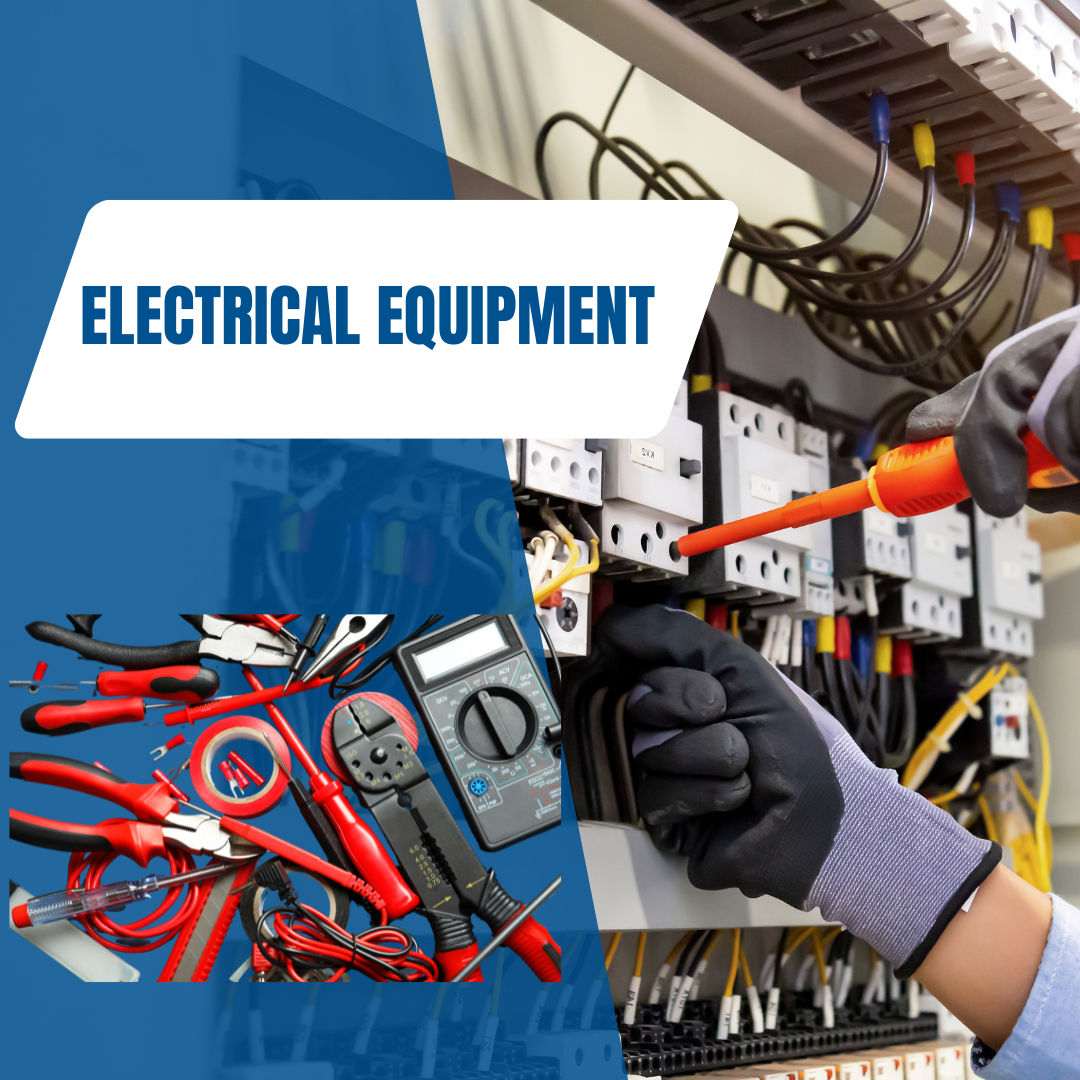
Sugar industry electrical equipment operation training
Electrical equipment operation
Br5000.00Br4000.00
1. Introduction
Investing in this specialized electrical equipment operation technical training is crucial for the sustainable and efficient functioning of any sugar factory. It empowers the workforce, enhances safety, and directly contributes to the factory's profitability and competitive edge. We are confident that this program will yield significant and lasting benefits for your organization.
2. Training Objectives
Upon completion of this training program, participants will be able to:
Understand the fundamental principles of electrical power generation, distribution, and utilization in a sugar factory environment.
Safely operate various electrical equipment, including motors, transformers, switchgear, generators, and control systems (PLCs/DCS).
Perform routine inspection, preventive maintenance, and basic troubleshooting of electrical machinery.
Identify potential electrical hazards and implement appropriate safety measures in accordance with industry best practices and regulatory requirements.
Interpret electrical schematics, single-line diagrams, and technical manuals.
Optimize energy consumption and contribute to energy efficiency initiatives within the factory.
Respond effectively to electrical faults and emergencies, minimizing production losses.
3. Target Audience
This training program is suitable for:
Electrical Engineers and Technicians
Maintenance Supervisors and Staff
Operators involved with electrically driven machinery
Junior Engineers and Trainees seeking specialized knowledge in the sugar industry.
Anyone involved in the electrical aspects of sugar production and processing.
4. Training Modules / Curriculum
The training program is structured into the following modules:
Module 1: Electrical Safety and Regulatory Compliance
1.1. Introduction to Electrical Safety:
Importance of electrical safety in industrial environments.
Common electrical hazards (shock, arc flash, fires).
Statistical overview of electrical accidents in industry.
1.2. Safety Regulations and Standards:
Overview of local and international electrical safety standards (e.g., OSHA, IEC, NFPA 70E, factory-specific safety protocols).
Lockout/Tagout (LOTO) procedures: detailed steps and practical application.
Personal Protective Equipment (PPE) for electrical work: selection, care, and usage.
1.3. Emergency Procedures:
First aid for electrical shock victims.
Fire safety and extinguisher types for electrical fires.
Emergency shutdown procedures.
Module 2: Basics of Electrical Systems in Sugar Mills
2.1. Power Generation and Distribution:
Boiler and Turbine Generators: Principles of operation, synchronization, and control.
Main Switchyard and Substations: Components and functions.
Medium Voltage (MV) and Low Voltage (LV) distribution networks within the factory.
2.2. Electrical Components and Circuits:
Review of AC/DC circuits, voltage, current, resistance, power, and reactive power.
Understanding single-phase and three-phase systems.
Types of cables, conductors, and insulation.
Circuit breakers, fuses, and protective devices.
2.3. Reading Electrical Drawings:
Interpretation of single-line diagrams, schematic diagrams, and wiring diagrams.
Standard electrical symbols and notations.
Module 3: Operation & Maintenance of Key Electrical Equipment
3.1. Electric Motors (AC & DC):
Types of motors used in sugar mills (induction, synchronous, DC).
Principles of operation, construction, and applications (e.g., cane shredders, crushers, pumps, fans, centrifugals).
Motor starting methods (DOL, Star-Delta, Soft Starters, VFDs).
Routine operational checks and preventive maintenance.
Common motor faults and their indicators (e.g., overheating, vibration, noise).
3.2. Transformers:
Types, construction, and principles of operation.
Cooling methods and protection schemes.
Routine inspections and maintenance.
Tap changer operation and importance.
3.3. Switchgear and Motor Control Centers (MCCs):
Components of switchgear (breakers, isolators, protective relays).
MCCs: design, components, and operation.
Interlocking systems and safety features.
Maintenance practices for switchgear and MCCs.
3.4. Programmable Logic Controllers (PLCs) and Distributed Control Systems (DCS):
Introduction to PLC/DCS architecture and functions in sugar factory automation.
Basic programming concepts (ladder logic).
Interfacing with field devices (sensors, actuators).
Troubleshooting PLC/DCS-related issues (basic level).
3.5. Generators and Standby Systems:
Operation of factory generators (if applicable).
Automatic Transfer Switches (ATS) and standby power systems.
Battery banks and UPS systems.
Module 4: Troubleshooting and Diagnostics
4.1. Systematic Troubleshooting Methodology:
Step-by-step approach to identifying and resolving electrical faults.
Using electrical test equipment (multimeters, clamp meters, insulation testers).
4.2. Common Electrical Faults:
Short circuits, open circuits, ground faults.
Overload conditions.
Phase imbalances.
Power factor issues.
4.3. Equipment-Specific Troubleshooting:
Troubleshooting common issues with motors, transformers, and switchgear.
Identifying control circuit malfunctions.
Module 5: Energy Management and Efficiency
5.1. Power Factor Correction:
Understanding power factor and its impact.
Capacitor banks: operation and maintenance.
5.2. Variable Frequency Drives (VFDs):
Principles of VFD operation and energy saving benefits.
Installation considerations and basic parameter settings.
Troubleshooting VFD issues.
5.3. Energy Audits and Conservation:
Basic concepts of energy auditing in a sugar factory.
Strategies for reducing electrical energy consumption.