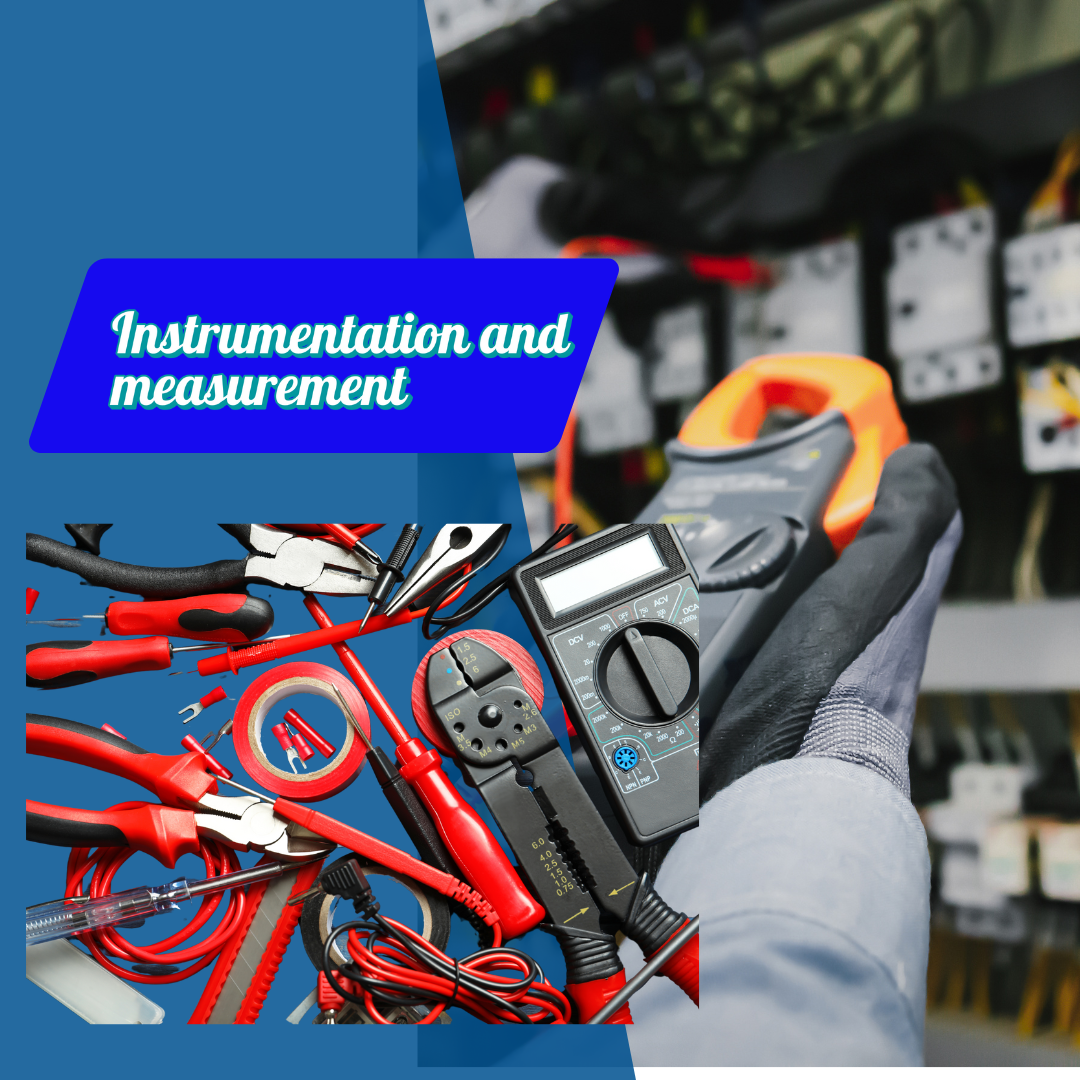
Sugar Industry Instrumentation and measurement Operation Training
Instrument and measurement operation
Br5000.00Br4000.00
1. Introduction/Executive Summary
Investing in a well-structured instrumentation operation technical training program is paramount for any sugar industry committed to operational excellence, safety, and sustained productivity. This training program designed to empower your workforce with the essential skills to effectively manage and optimize your plant's critical instrumentation systems. We are confident that this training will lead to improved plant reliability, reduced operational costs, and enhanced safety standards.
2. Training Objectives
Upon completion of this training program, participants will be able to:
Understand the fundamental principles of various instrumentation types used in sugar processing.
Identify, operate, and interpret readings from common process control instruments (e.g., flow meters, pressure sensors, temperature sensors, level indicators, analytical instruments).
Perform routine calibration and maintenance procedures for a range of instruments.
Diagnose and troubleshoot common faults and anomalies in instrumentation loops.
Understand basic process control strategies and their application in sugar production.
Interpret Process & Instrumentation Diagrams (P&IDs) and understand control philosophies.
Adhere to safety protocols and best practices related to instrumentation work in a hazardous environment.
Utilize data from instruments for process optimization and decision-making.
3. Target Audience
This training is designed for personnel involved in the day-to-day operation, maintenance, and supervision of sugar processing plants, including:
Instrumentation Technicians
Process Operators
Maintenance Engineers (Electrical & Instrumentation)
Supervisors overseeing production and maintenance
Junior Engineers seeking specialized knowledge in process instrumentation
4. Training Modules/Curriculum
The training program will be structured into the following key modules:
Module 1: Fundamentals of Instrumentation & Control (8 hours)
Introduction to process control loops (open loop vs. closed loop)
Basic concepts: process variable, measured variable, controlled variable, manipulated variable, setpoint, error.
Units of measurement and conversion.
Understanding P&IDs: Symbols, conventions, and reading flow diagrams.
Types of signals: Analog (4-20mA, 0-10V) and Digital (ON/OFF, Pulse).
Introduction to calibration and accuracy.
Module 2: Temperature Measurement (8 hours)
Principles of temperature measurement.
Types of temperature sensors: Thermocouples, RTDs (Resistance Temperature Detectors), Thermistors.
Selection criteria for temperature sensors in sugar processes (e.g., syrup, massecuite).
Calibration techniques for temperature instruments.
Common failures and troubleshooting.
Module 3: Pressure Measurement (8 hours)
Principles of pressure measurement: Absolute, Gauge, Differential.
Types of pressure sensors: Diaphragm, Bourdon tube, Electronic transducers.
Application in sugar processing: Evaporators, vacuum pans, pumps.
Calibration and zero/span adjustment.
Troubleshooting pressure instrument issues.
Module 4: Level Measurement (8 hours)
Principles of level measurement.
Types of level sensors: Hydrostatic, Ultrasonic, Radar, Capacitance, Float.
Selection based on process fluid (e.g., molasses, juice, sugar).
Calibration and installation considerations.
Troubleshooting level control systems.
Module 5: Flow Measurement (12 hours)
Principles of fluid flow and flow measurement.
Types of flow meters: Magnetic (Magmeter), Coriolis, Orifice Plate, Venturi, Turbine, Ultrasonic.
Applications in sugar processing: Juice flow, water flow, steam flow.
Installation, calibration, and maintenance of flow meters.
Batch control and totalization.
Module 6: Analytical Instrumentation (12 hours)
pH measurement: Principles, electrodes, calibration, and maintenance.
Conductivity measurement: Principles, applications (e.g., condensate, sugar liquor).
Brix measurement: Refractometers (online and offline).
Turbidity measurement.
Dissolved Oxygen (DO) sensors.
Importance in quality control and process optimization.
Module 7: Control Valves & Actuators (8 hours)
Introduction to control valves: Types (globe, butterfly, ball), trim characteristics.
Actuators: Pneumatic, Electric.
Valve positioners: Calibration and tuning.
Sizing and selection considerations.
Troubleshooting valve issues (sticking, hunting).
Module 8: Distributed Control Systems (DCS) / PLC Basics (12 hours)
Overview of DCS/PLC architecture in sugar plants.
Understanding control loops within the DCS/PLC.
Reading and interpreting control logic (basic ladder logic/function block diagrams).
Human Machine Interface (HMI) interpretation and operation.
Alarm management and troubleshooting in the control system.
Data logging and trending.
Module 9: Instrument Installation, Wiring & Safety (8 hours)
Best practices for instrument installation.
Wiring and grounding techniques.
Cable selection and protection.
Hazardous area classifications (Divisions/Zones).
Intrinsic safety and explosion-proof concepts.
Lockout/Tagout (LOTO) procedures for instrumentation.
Module 10: Practical Sessions & Case Studies (24 hours)
Hands-on calibration of various instruments (temperature, pressure, pH, flow).
Simulated troubleshooting scenarios on instrument trainers or actual plant equipment (if available).
Workshop on reading and marking up P&IDs.
Group discussions and case studies on common instrumentation problems in sugar mills.
Practical exercises on DCS/PLC operator stations (simulated or actual).